Inspections are an essential part of maintaining operational efficiency, safety, and compliance across industries. Whether it’s a regulatory audit, client inspection, or internal quality check, being unprepared can lead to delays, non-compliance, or even safety hazards. For organizations relying on advanced engineering and operational systems, such as those managed by AMS System Solutions, preparation is key.
This blog provides a practical, step-by-step checklist to help your team get ready for inspection visits. By following these guidelines, you can ensure a smooth process, demonstrate professionalism, and maintain compliance with industry standards.
1. Understand the Inspection Scope
The first and most crucial step in preparing for an inspection is understanding the scope and type of inspection. Inspections may include:
- Regulatory inspections: Audits conducted by governmental or third-party agencies to ensure compliance with standards.
- Client-specific inspections: Evaluations requested by clients to confirm that products, equipment, or services meet their requirements.
- Internal quality checks: Regular inspections carried out internally to monitor processes, safety, and compliance.
Tips for preparation:
- Identify which regulations, standards, or codes will be assessed. Common examples include ISO certifications, API codes, OSHA safety standards, or industry-specific requirements.
- Determine high-risk areas or components that inspectors are likely to examine. This allows your team to focus on critical points and avoid surprises.
- Create a checklist of all inspection criteria to ensure nothing is overlooked.
By fully understanding the inspection scope, your team can allocate resources effectively and ensure compliance across all departments.
2. Organize Documentation
Proper documentation is often the first thing inspectors review, making it essential to have all records accurate, complete, and easily accessible.
Key documents to prepare:
- Maintenance records: Keep detailed logs of all routine maintenance activities, repairs, and equipment checks.
- Calibration certificates: Ensure all measurement tools, machinery, and devices are calibrated and certificates are up-to-date.
- Operational logs: Maintain records of system operations, process monitoring, and production activities.
- Safety and compliance records: Include incident reports, hazard assessments, and safety protocol adherence.
- SOPs and equipment manuals: Have clear, organized manuals and procedures for all equipment and operations.
- Licenses and permits: Verify that all necessary licenses, permits, and certifications are valid and available for review.
Pro Tip: Digitize documentation whenever possible. Digital records are easier to organize, retrieve, and share during inspections, reducing stress for both your team and the inspector.
3. Prepare Equipment and Facilities
A critical part of any inspection is equipment readiness and facility organization. Inspectors will look at the functionality, safety, and compliance of your machinery and systems.
Steps to prepare equipment:
- Conduct a pre-inspection check on all machinery and systems. Verify that everything is in proper working order.
- Ensure safety equipment such as fire extinguishers, PPE, alarms, and emergency shutoffs are functional.
- Conduct preventive maintenance for critical equipment before the inspection.
- Check calibration of measuring instruments and tools to confirm accuracy.
Facility preparation:
- Maintain clean and organized areas, especially around high-risk or high-traffic zones.
- Ensure inspection pathways are clear for easy access to critical equipment.
- Implement temporary signs if needed to guide inspectors safely through the facility.
Why it matters: A well-maintained and organized facility reflects professionalism and attention to safety, which can positively influence inspection outcomes.
4. Assign Roles and Responsibilities
Preparation is not only about equipment and documents — it also requires clear team coordination.
How to assign roles:
- Designate a single point-of-contact for the inspection team. This person will guide inspectors, answer questions, and coordinate with internal staff.
- Assign team members to assist with specific areas of the inspection. For example, one engineer can oversee mechanical systems while another handles documentation verification.
- Conduct a pre-inspection briefing to ensure all employees understand their responsibilities, expected questions, and proper behavior during the visit.
Tip: Clear communication prevents confusion during inspections and ensures that every area is covered efficiently.
5. Conduct a Mock Inspection
Simulating an inspection can help identify potential gaps or areas of concern before the actual visit.
Steps for a mock inspection:
- Review all documentation and equipment as an inspector would.
- Identify weak points, incomplete records, or safety hazards that need attention.
- Document findings and take corrective action immediately.
- Train employees on proper responses to inspector questions.
Benefits: Mock inspections allow your team to practice, improve confidence, and address compliance issues in advance, reducing the likelihood of surprises or negative observations during the official inspection.
6. Communicate with Your Team
A successful inspection relies on team readiness and awareness.
Key actions:
- Inform all employees of the inspection schedule, type, and expectations.
- Reinforce safety protocols, standard operating procedures, and compliance requirements.
- Encourage staff to proactively report any issues or concerns that could affect the inspection outcome.
- Maintain open communication channels throughout the inspection day for quick problem-solving.
Pro Tip: Positive communication ensures that every team member understands the importance of inspections and actively contributes to a smooth process.
7. Plan for Follow-Up
Preparation does not end when the inspection concludes. A proper follow-up system ensures that observations, recommendations, and corrective actions are addressed effectively.
Follow-up steps:
- Maintain a system for recording all notes, findings, and recommendations from the inspection.
- Assign responsible personnel for implementing corrective actions.
- Set realistic timelines for completing improvements or fixes.
- Schedule follow-up reviews to verify that issues have been resolved and compliance is maintained.
Why it matters: Timely follow-up not only ensures compliance but also demonstrates your organization’s commitment to continuous improvement and operational excellence.
8. Additional Tips for a Successful Inspection
- Prepare your staff mentally: Employees who are calm, knowledgeable, and confident leave a positive impression.
- Label critical equipment and areas clearly: Helps inspectors navigate efficiently and reduces delays.
- Have a contingency plan: Prepare for unexpected issues such as equipment failure or missing documentation.
- Maintain a clean workspace: Cleanliness reflects professionalism and attention to detail.
- Use technology: Mobile apps or software can streamline record-keeping and provide instant access to documentation.
9. Downloadable Checklist
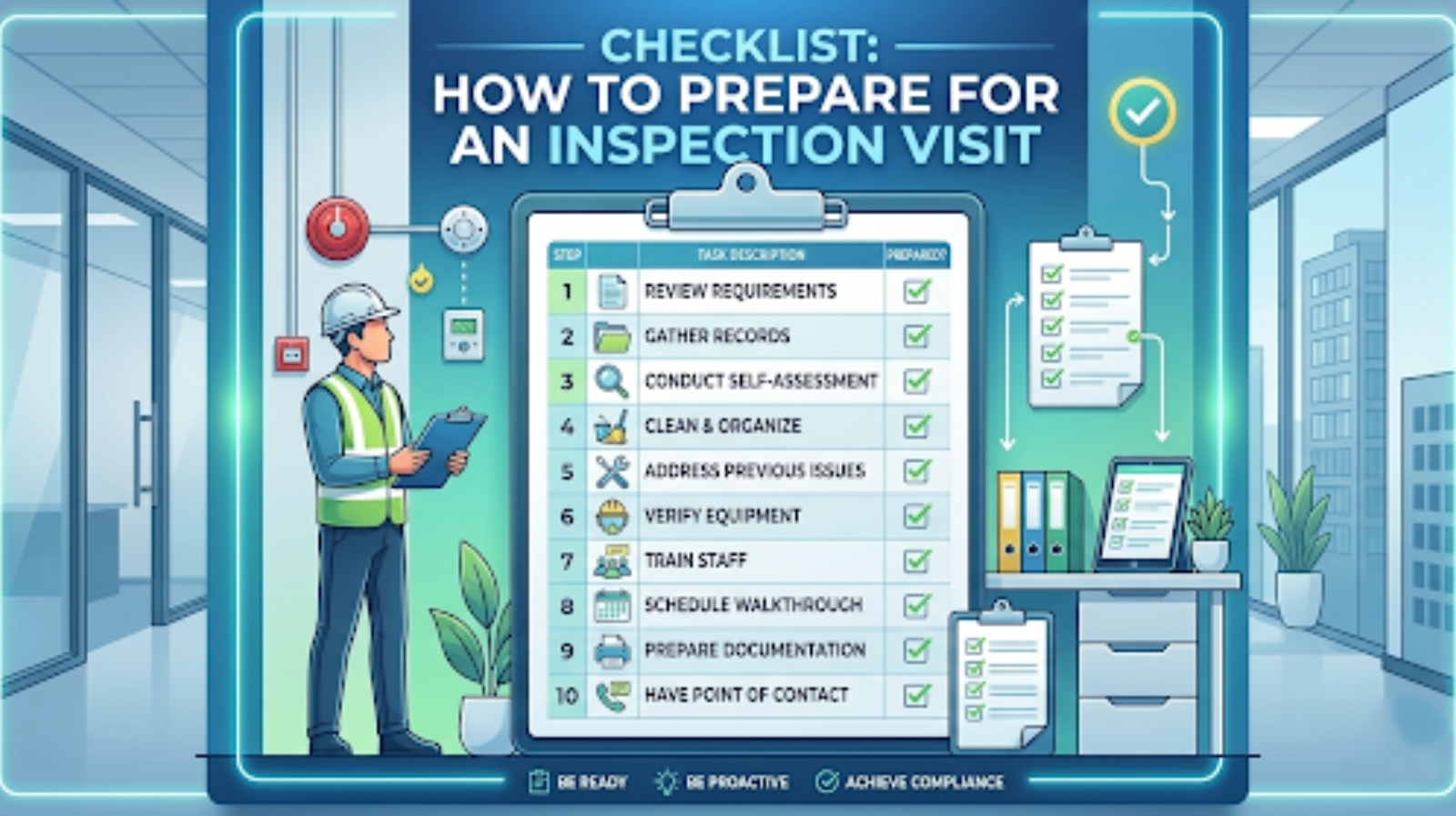
To make preparation easier, AMS System Solutions offers a Printable Inspection Visit Checklist. It is designed to cover all essential areas, from documentation to facility readiness, and can be used for both internal and external audits.
Conclusion
Proper preparation is the key to a successful inspection. By following this detailed checklist, your team can:
- Demonstrate professionalism and compliance.
- Ensure equipment, documentation, and facilities are ready.
- Minimize stress and last-minute errors.
- Improve the likelihood of positive inspection outcomes.
At AMS System Solutions, we help businesses streamline inspection preparation, maintain compliance, and ensure operational excellence. With proper planning, your inspection visit becomes not just a requirement but an opportunity to showcase efficiency, safety, and expertise.